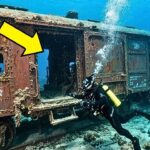
The metal tracks shouldn’t have been there, stretching into the deep like they’d been laid yesterday. Most divers look for gold or coral, but I was staring at parallel lines of steel cutting through the shifting sand.
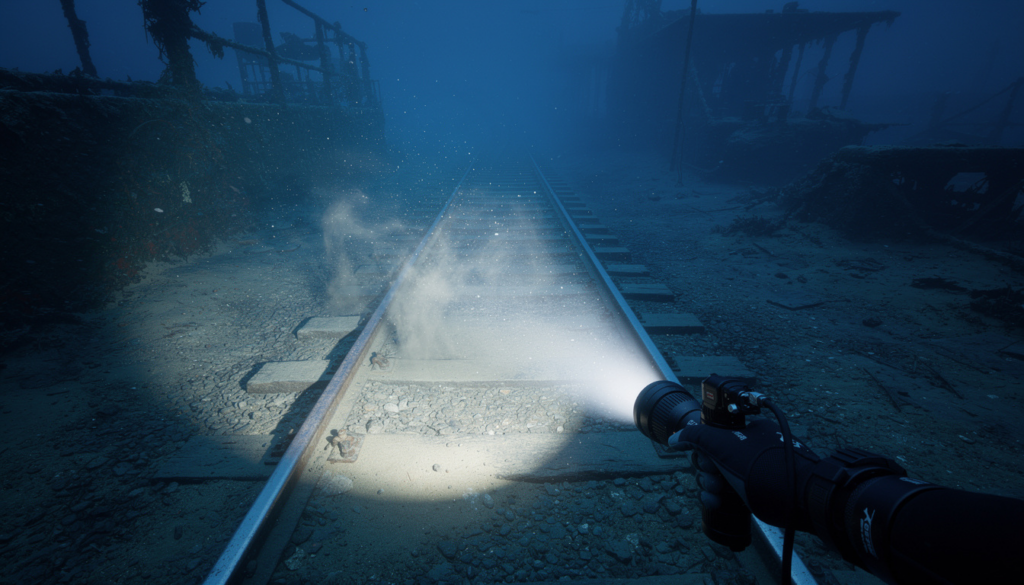
I checked my oxygen gauge, wondering if the nitrogen was finally playing tricks on my brain. The tracks were clean, oddly devoid of the thick crust of barnacles you’d expect from a century underwater. My fins kicked rhythmically as I followed the steel path deeper into the gloom.
Visibility was dropping, the water turning a heavy, bruised purple as I descended past sixty feet. That’s when the silhouette emerged—a massive, rectangular shadow that didn’t belong in a world of reefs and shipwrecks. It was a single, solitary train car resting perfectly upright on the rails.
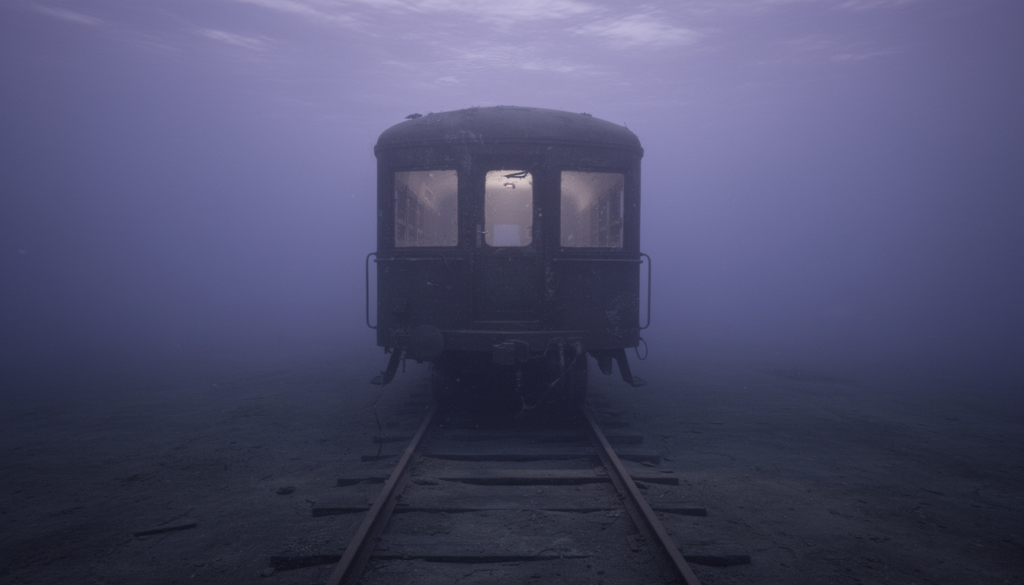
There were no signs of a derailment, no twisted metal, and no debris field scattered across the seafloor. It looked as if a giant hand had simply plucked the wagon from a station and set it down in the silence of the ocean. The faded logo on the side read “J.H.I.L.,” a company I had never heard of.
The windows were the most haunting part, staring back at me like empty, rectangular eyes. I moved closer, my flashlight beam reflecting off the glass, which was surprisingly intact despite the crushing pressure of the deep. I felt a sudden, sharp chill that had nothing to do with the water temperature.
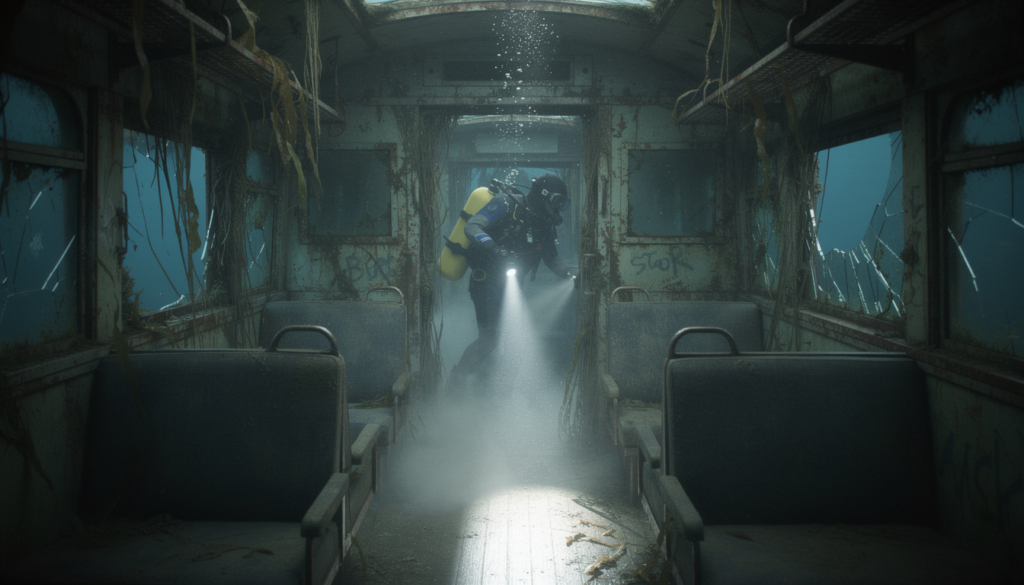
Behind the clouded glass, I saw movement—a flicker of a shadow darting between the rows of passenger seats. My heart hammered against my ribs as I steadied my breathing, trying to convince myself it was just a stray grouper. But the shadow moved with a deliberate, heavy grace that felt entirely too human.
I reached for the rear door handle, my gloved hand trembling as I prepared to breach the seal of a ghost train. This wasn’t just a maritime curiosity anymore; it felt like I was breaking into a tomb that wasn’t quite finished with its occupants.
Top Articles